Stretching from the Linyanti River all the way to Savute Marsh, the winding waterways of the Savute Channel have pumped life into the western section of Chobe National Park for many thousands of generations. However, this fickle and unpredictable channel, which has a fascinating history of flooding and drying up, independently of good rainy seasons and flood levels elsewhere, has mystified local inhabitants, geologists and others for many years.
THE UNEXPLAINED
When David Livingstone, the first European to visit the area, saw the Savute Channel in 1851 it was flowing. Thirty years later it had disappeared and the Savute Marsh had dried out, remaining this way for almost 80 years. It flowed again from the late 1950s to the early 1980s, when it again receded, hence its reputation as ‘the river that flows in both directions’.
In 2009, after another extended hiatus, the channel began flowing again and by January 2010 had spilled into the Savute Marsh for the first time in three decades, but for how long – no one knows …
Where To Stay?
ACCOMMODATION & THE LODGE
To ensure a private and relaxing environment, Savute Safari Lodge accommodates just twenty four guests in eleven thatched chalets built of local timber and one family room which consists of two double bedrooms. The chalets, which have been elegantly furnished in calm neutral tones to blend with the natural environment, feature expansive private decks, a combined bedroom and lounge area and en suite facilities.
Sink into one of the numerous comfortable leather, wood or wicker sofas in the lounge – and library – or sip a cocktail in the stylish bar. All these facilities are situated in a beautiful two-storey thatch-and-timber main building. Savute Safari Lodge offers a shaded viewing deck, an al fresco dining area and swimming pool with spectacular pool loungers – ideal for watching the varied wildlife – including the resident Elephants – as they make their way to the Channel to drink, bathe and play.
What To Do?
ACTIVITIES
Activities are organised around game drives throughout the Savute area in open 4×4 safari vehicles. Many trips will incorporate a visit to the Savute Marsh to give you a chance to see the historic presence of the Savute Channel at the marsh against a backdrop of teeming wildlife. Guests can also enjoy a visit to the ancient San rock paintings at Gubatsa Hills – a small hilly outcrop which forms a prominent landmark in the otherwise flat landscape.
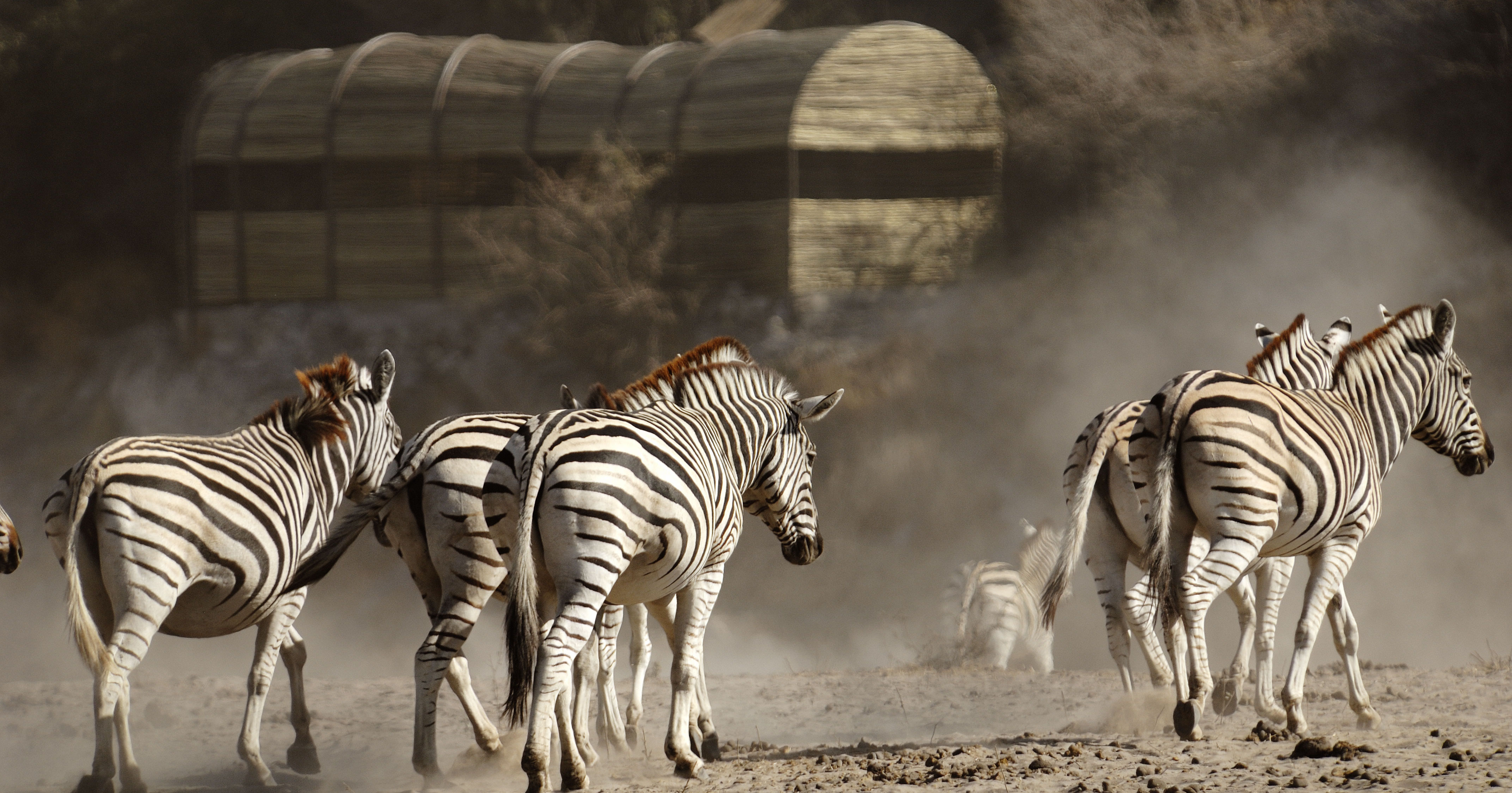
Savute boasts the second-largest summer Zebra migration in Africa; its timing is determined by the rains, but usually occurs between November and December and again between February and April, when the Zebras move from the rivers in the north in search of the rain-ripe grasslands and full waterholes in the southwest of the park. The migration is always followed by large numbers of predators – the Zebra migration is a must for visitors.
Safari HighLights
Lays claim to a large summer zebra migration, which is determined by the rains, but usually between November and December and again between February and April when the zebras move from the rivers in the north to the lush grasslands in the south.
Home to the Gubatsa Hills, formed 980 million years ago during volcanic movement, rise 90 meters high, out of a completely flat landscape. These outcrops bear the reminder of the nomadic San people through clear evidence of their rock art.
Savute is one of the few areas in Botswana where the elusive Klipspringer antelope can still be found.
What makes Savute most interesting is the fables Savute Channel, which has a history of drying up and flowing again. Savute means “Unpredictable – Something that cannot be explained” – and refers to the history of the Savute channel, flowing like a river into the Savute Marsh, and then, without warning or reason, drying up again. (this sequence of water flowing has much to do with the movement of tectonic rock plates below the surface of the Kalahari Desert.
Löwen im Savuti Game Reserve (Chobe-Nationalpark, Botswana).
Lions in the Savuti Game Reserve (Chobe National Park, Botswana).
Kenya is well known for its authentic safari experiences. A land of diverse splendor and beauty, from the famous Mount Kenya to the Indian ocean, he vast plains that teem with wildlife to the arid lands in the north and Great Rift Valley. There are over 40 indigenous tribal groups, each with their own dialect, many of whom have preserved their traditional cultural heritage. An abundance of wildlife await your discovery the wonders of this outstanding beautiful land.
Climate
Kenya boasts one of the best climates in the world, an ideal venue for an active holiday. The highland temperatures are cool but elsewhere averaging between 25 ?30 degrees during the day. The coast is humid and balmy. Over most of the country there are 2 rainy seasons – the long rains occurring over the months of April and May, and the short rains in November
Places Of Interest To Explore! / SAFARI HOTSPOTS!
AberdaresNational Park – a highland reserve with unique forest elephant, giant forest hog and protecion for the endangered black rhino.Exciting bird species.
AmboseliNational Park– an Tortalis, Eco lodge dwarfed by the majestic Kilimanjaro, close up and personal with Africa’s Pachiderms.
MeruNationalPark– Elsa’s Camp, a hidden African jewel made famous in the film ‘Born Free’ by George & Joy Adamson.
Maasai Mara Game Reserve – National Park is a wildlife experience unsurpassed in the word. The great Migration herds fill the horizons with one-and-a-half million wildebeest, 200 000 zebra, 18 000 eland and 500 000 Thompson’s gazelle. They cross the crocodile infested waters. This is a dramtic life and death stuggle and a unique experience of nature in its bid to survive and move in search of better grazing.
Laikipiak– an alluring haven on the northern edge of the northern frontier. Time stands still and the haunting beauty of the wilderness spreads out befroe you. Camel treks and walking safaris amoungst the game with the Laikipak Maasai and professional guides.
Lewa – the northern foothills of Mt. Kenya, is Lewa Wildlife Conservancy. Founded by Anna Merz, Lewa has gained a reputation for extending benefits of conservation beyond its borders. Scenically spectacular and densely populated with exciting wildlife. All income generated goes directly towards conservation and community projects.
Tsavo National Park– the largest protected area inkenyamade famous by Dr Dame Daphne Sheldericks Elephant conservation projects.
WHAT TO DO?
Culture – a wide diversity of tribal peoples with their interesting traditions and ceremonies reflecting their heritage.
Game Drives – these are operated in open vehicles, usually at dawn and dusk to seek out the most interesting wildlife. Night drives are also available in private reserves.
Your journey with Plains of Africa Safaris to this special country, begins at the very heart of Africa, The Victoria Falls and if you so inclined a stay at one of “The Worlds Leading Hotels”,The Victoria Falls Hotel, the address of choice for more than a century for royal families, statesmen, celebritites and the discerning traveller.
There are a variety of very special lodges and hotels within the Falls region that suite your individual budget and safari experience to name a few; Ilala Lodge, Victoria Falls Lodge, Gorges Lodge and Pioneer Safari Camp. Further along the river towards Kazungula is Imbabala – an excellent spot for birding.
Explore Africa’s fourth longest river, the mighty Zambezi along the shores of Lake Kariba, staying at the Bumi Hills or for a more rustic experience, Musango Camp and for those even more into wilderness, Rhino Island Camp. Your journey does not stop here further along towards the middle and Lower Zambezi River is Mana Pools National Park, a World Heritage Site and region of great beauty. Camps in this region are rustic and the general overall experience here is one of exclusivity and pure untouched wilderness.
There are several World heritage sites within Zimbabwe all worth visiting including Matapos National Park. Accommodation options in Matopas are varied including Big Cave Camp – A Classic Safari Camp of Africa and for those wishing to be off the beaten track there is Shuma Shaba – a remote exclusive experience set in among the large granite gomos/gwalas of this remarkable region. An area filled with history, ancient relics, endangered species and important breeding site for eagles.
Let us take you on a safari of a lifetime experience and witness the unforgettable sight of hundreds of elephant around a waterhole from one of the “Classic Safari Camps of Africa”, The Hide Safari Camp, situated in the HwangeNational Park.
A safari to Zimbabwe is of excellent standard and attention to detail. Professional guides, amazing visitas and wildlife, Zimbabwe is a place that will touch your heart. The people are friendly and they truly care about the visitors to their country. This is a country that must be on your “Bucket List”!
Climate
Zimbabwe’s climate is considered to be pleasant allowing one to visit at any time of the year. The rains start at the beginning of November through to April. October tends to be the hottest month particularly in the lower areas of the ZambeziValley. The dry months are from May to October. Cool periods experienced around June/July.
Where to go?
Victoria Falls National Park – one of the “Natural Wonder’s of the World”.
Mana Pools National Park – famous for walking and canoeing among the big game along the Zambezi River.
Gona ReZhou National Park – The Place Of Elephants – Zimbabwe’s second largest National Park – over 5000 square kilometres of pristine wilderness
Hwange National Park – one of the largest National Parks in Africa with magnificent wildlife.
Alasdair is a Zimbabwean living in the U.K. Being away from Africa, has given Alasdair a deep appreciation of what Africa has to offer.
Working in the both the USA and the UK for the last 10 years, Alasdair has been exploring the way we are living digital lives and how digital tools can enhance the way we work, live and play, whilst allowing us to have our feet planted firmly on the ground.
‘As I was born and grew up in Zimbabwe, I also enjoy dissecting the different ways that we, as businesses and people, can seriously approach green initiatives and sustainability. It is understood that the fastest way to change the way we consume is to change the way we produce. The most effective way to change the way we produce is to find viable alternatives that increase efficiencies, reduce costs and enable communities. Technology, fresh thinking and a growing sense of corporate responsibility are helping us do just that.’
‘Working with Julie Edwards has been brilliant. I have had the pleasure of having her guide me through the African bush on numerous occasions. Her knowledge is incredible, from animals and birds, identifying spoor, fauna and flora, to understanding the entire eco-systems. Having trained and worked as a professional guide, Julie is very well placed to put together some of the most incredible, life changing safari itineraries.’